Forestry mulching, grubbing, burning, hauling — the options are not interchangeable. A plain-English guide to the methods, what each one costs you in time, and how to pick.
Most people call us and say "I need my lot cleared." That can mean five different jobs depending on what you plan to do with the land afterward. Clearing for a house pad is not the same as opening up a pasture, and neither one is the same as knocking back underbrush along a fence line.
Forestry mulching
A mulching head grinds standing brush and small-to-medium trees into chips and leaves them on the ground as a mulch layer. Nothing gets hauled off, so there is no burn pile and no dump fees. The mulch layer helps with erosion and breaks down over time.
This is the right call for underbrush, overgrown lots, trail cutting, and anywhere you want the land opened up without disturbing the soil. It is not the right call if you need bare dirt to build on — the stumps and root systems are still in the ground.
Grubbing and full clearing
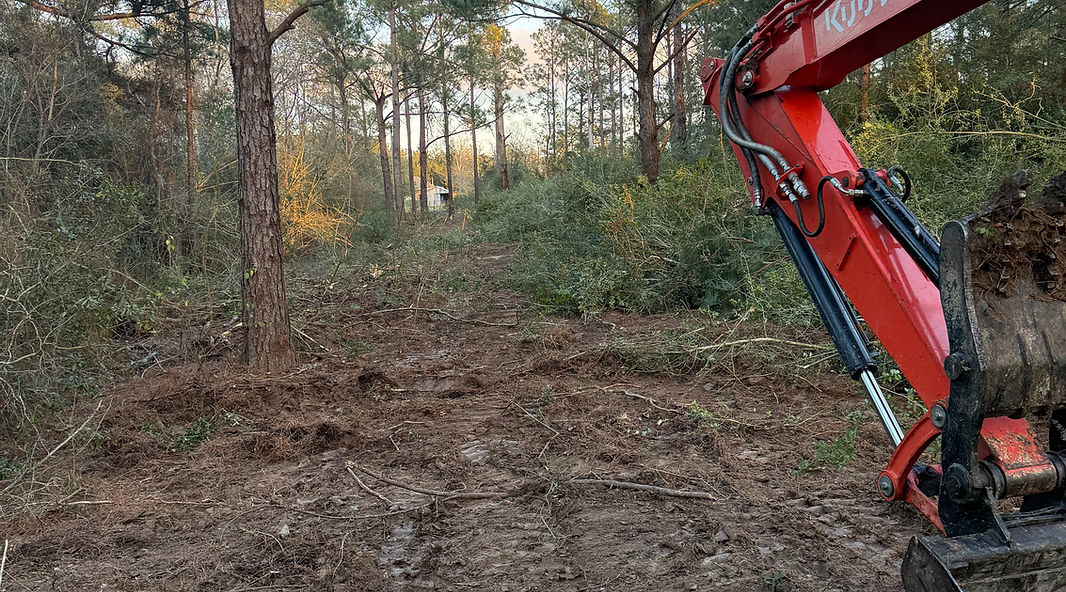
When something is getting built, the roots have to come out. Grubbing pulls stumps and root balls out of the ground so you have clean soil to build a pad on. It moves more dirt, leaves more mess to deal with, and takes longer — but you cannot skip it if a structure is going on that spot.
Stump grinding
For a handful of stumps in an otherwise finished yard, grinding is usually cheaper and far less disruptive than digging them out. The grinder takes the stump down below grade, you fill the hole with dirt, and the lawn recovers.
What to think about before you call
- —What is the land going to be used for — building, pasture, recreation, or resale?
- —Are there trees you want to keep? Mark them before we get there.
- —Where do property lines actually run? A survey saves arguments later.
- —Any wetlands, drainage servitudes, or utility easements on the property?
- —Is there equipment access, or do we need to open a path in first?

A word on burning and permits
Burn rules, wetland determinations and clearing permits vary by parish and can change with conditions — outdoor burning in particular is often restricted seasonally. Check with your parish office and the state before you plan around a burn pile. We are happy to help you figure out who to call.
Not sure which method your property needs? Send us pictures or let us come walk it. Most of the time we can tell you in ten minutes what makes sense and what would be a waste of your money.