Dirt Work — Lake Charles, LA

Dirt Work, Excavating and House Pads in Lake Charles, Louisiana

Ponds, building pads, driveways, culvert installations and precision grading — and just about anything else you can do with dirt. Based in Lake Charles, working across Southwest Louisiana.

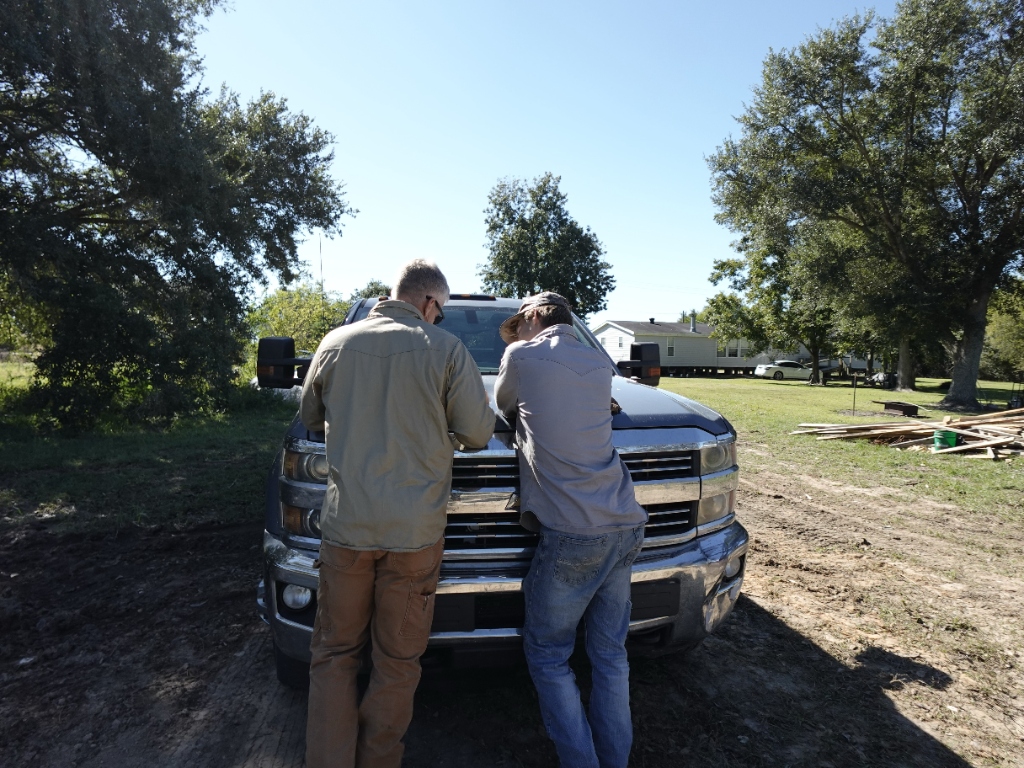
Upward Development crew working a dirt job site in Calcasieu Parish

Dirt work is the part nobody sees and everything depends on

Dirt work is site preparation: moving, shaping and compacting ground so that whatever comes next — a slab, a shop, a driveway, a home — sits on something that will not move. It is the least visible line on a construction budget and the one that causes the most expensive problems when it is done carelessly.

A pad that was not compacted in lifts settles, and the slab on top of it cracks. A driveway built without thinking about where water goes turns into a rut. A pond dug without a plan for the spoil leaves you with a pile of clay you now have to pay somebody to move. None of that is visible on the day the machine leaves.

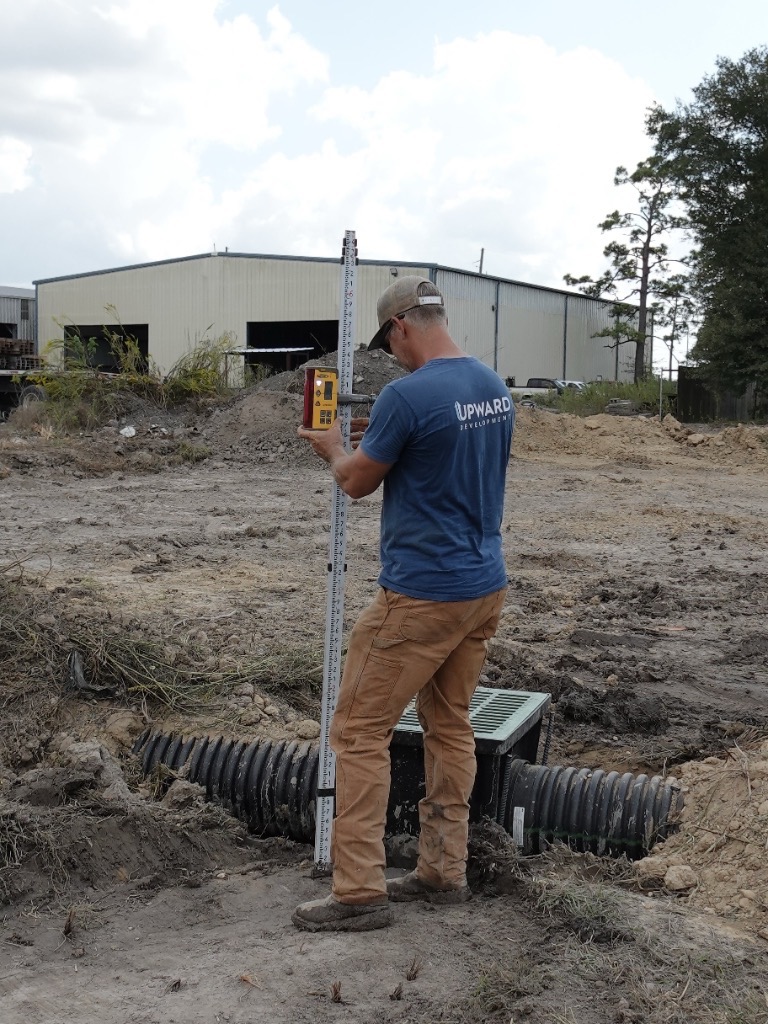
Laser grade equipment set up to check elevations on a build pad

Grade set with laser and GPS, not by eye

We set elevations with laser and GPS grade equipment on every job that needs it. In flat country like ours, drainage lives or dies on a couple of inches across a hundred feet, and that is not something anybody can eyeball accurately, no matter how long they have been running a machine.

It also means the grade is a number we can hand you and you can check, rather than an opinion. On a house pad, that number is what the concrete contractor is going to build against.

The dirt work we get called for most

Most of what comes through the phone falls into one of these. If your project is not on the list it is still worth a call — we would rather tell you it is not our work than have you guess.

Building pads for homes, shops and additions

Stripping topsoil and organics off the footprint, bringing in select fill, compacting it in lifts rather than in one dump, and setting the final elevation so water sheds away from the building. This is the step we will not rush, because the pad decides whether the slab above it stays flat.

How we approach a house pad

Ponds — new excavation and reshaping

Digging a pond, deepening one that has silted in, or reshaping banks that are caving. The two questions that decide the job are where the water comes from and where the spoil goes, and both get answered in the scope before a machine shows up.

Pond work around Moss Bluff

Driveways, approaches and culvert installations

New drives, widening an existing one for a work truck, adding a second entrance, or setting the culvert that lets you cross a ditch without damming it. Culvert work is as much about the water as the vehicles — a pipe set at the wrong elevation moves your neighbor's problem onto your property.

Driveway and culvert work

Yard grading and drainage site work

Re-shaping ground so water leaves instead of standing. Sometimes that is a few inches of fall carried to a ditch, sometimes it is a swale. We will tell you honestly when the fix is bigger than what dirt alone will solve, because sometimes it is.

Grading and drainage

Debris removal and post-demolition cleanup

Hauling off what is left after a structure comes down, clearing a burn pile, or cleaning up a lot so it can be worked. Often the last step of a clearing job, sometimes the whole job.

See land clearing

Pads and site prep for a steel building

When the pad and the building come from the same company, the anchor bolt layout and the slab are one person's responsibility instead of two contractors pointing at each other.

See steel buildings

Dirt work, excavating, grading, site prep — mostly the same job

People call this work by whatever name they grew up with, and the words get used interchangeably around here. If you are looking for an excavating contractor, a grading and excavating contractor, a company that does excavating services, a dirt contractor or a site prep company, you are looking for what is on this page. There is no meaningful distinction between those job titles in Southwest Louisiana.

If there is a shade of difference worth knowing, it is this: excavating usually implies digging — a pond, a footing trench, a pool hole, taking material out. Grading implies shaping what is already there to a target elevation. Dirt work and site preparation cover both, plus hauling material in. We do all of it with our own equipment and our own people, so you do not need to know which word applies before you call.

The one thing we are not is a broker. There is no subcontractor behind us on this work. The excavators, dozers, track loaders, tractors, lasers and pumps are ours and the operators are ours.

Why Southwest Louisiana ground makes this harder than it looks

Three things about this region drive most of what we do differently than a contractor working somewhere drier and hillier. The ground is flat, so there is very little natural fall to carry water off a property. Much of the soil is heavy clay that holds water instead of draining it, and that swells and shrinks as it wets and dries. And we get a lot of rain, in bursts, on top of a high water table.

Put together, that means the margin for error on elevations is small, a pad has to be built out of the right material rather than whatever is already on site, and timing matters. Working clay when it is too wet makes a mess that costs more to fix than waiting cost you. We will say so when that is the situation, rather than showing up because it was on the calendar.

It also means the honest answer to some questions is that dirt will not solve it. If a yard holds water because there is nowhere within reach for it to go, adding fill moves the problem rather than fixing it. That is a conversation worth having before you spend money, not after.

General walkthrough — not a specific customer project

What a house pad job usually involves

Pad work is the most common dirt job we do, and the one people have the least visibility into. Here is the shape of it, so you know what you are buying.

  • Walk the property, find the access route and confirm where the building is actually going
  • Locate utilities before anything digs, including the lines running to an existing house
  • Strip topsoil and organics off the footprint and stockpile them for finish grading later
  • Haul in select fill and compact it in lifts, checking grade as the pad comes up
  • Set the final elevation high enough that water sheds away from the building and off the pad
  • Cut the approach or tie the new drive into the existing one
  • Spread the stockpiled topsoil back out and walk the finished grade with you

How a dirt work project runs

  1. You call or text

    We answer phone calls, text messages and emails. That is a low bar, and it is also the most common complaint people have about this industry.

  2. We come look at the property

    Standing on the dirt tells us things a description cannot — access width, what is overhead, where water is already going, and whether the ground is workable right now.

  3. We scope it and price it

    You get told what is included and what is not before you decide anything. That includes where spoil goes and whether fill has to be hauled in, which are the two line items that surprise people at the end of a badly scoped job.

  4. We put it on the calendar

    We keep a calendar and a plan and we talk about both with our customers and our crew, including when weather moves something.

  5. We do the work and walk it with you

    Nothing is called finished until you have seen it and we have been over the grade together.

Questions we get about dirt work

How much does a house pad cost?
It depends almost entirely on how much fill the pad needs and how far that fill has to travel, and neither of those can be guessed from a phone call. A pad on high ground that only needs shaping is a different job from one that needs two feet of imported material. Call or text 318-452-7653 and we will come look at it, then you get a number with the assumptions written next to it.
Can you get equipment into my back yard?
Usually, yes — the honest answer depends on gate width, side-yard clearance and what is overhead. We run everything from big excavators down to track loaders and tractors, so the question is which machine fits, not whether we have one. Send a photo of the access and we can normally tell you before we drive out.
What happens to the dirt you dig out?
That gets settled in the scope before we start. Sometimes spoil can be spread or used elsewhere on your property, which saves you money. Sometimes it has to be hauled off. Either way it is priced up front rather than discovered at the end.
How long does a pad need to sit before concrete goes on it?
Ask your concrete contractor and your engineer, because that call is theirs and it depends on how the pad was built and what is going on top of it. What we control is that the fill was the right material and compacted in lifts, which is what makes a short wait acceptable instead of a gamble.
Do I need a permit for a driveway or a culvert?
Often, and it differs depending on whether the property is inside city limits or in unincorporated parish, and whether the ditch is a parish or state right of way. Check with your city or the Calcasieu Parish Police Jury before you commit to a plan. We will tell you what we know, but we are not going to guess at a rule that is yours to confirm.
Will you tear up the rest of my yard getting back there?
Some rutting is realistic on wet ground, and anyone who promises otherwise is guessing. What we can do is plan the route, work the ground when it is in the right condition where the schedule allows, and put the access back the way we found it. Tell us up front if there is a sprinkler system or a septic field and we will route around it.
Do you charge for an estimate?
Call or text and we will talk through what you are trying to do. For anything where we need to see the property, we come look at it.
Dirt work by area

We are based in Lake Charles and drive to the rest. These pages cover what comes up most often in each community:

Tell us what you are trying to build

Call or text 318-452-7653 with the address and a rough idea of the project, or send photos of the spot. If it is something we do, we will come look at it. If it is not, we will say so.